
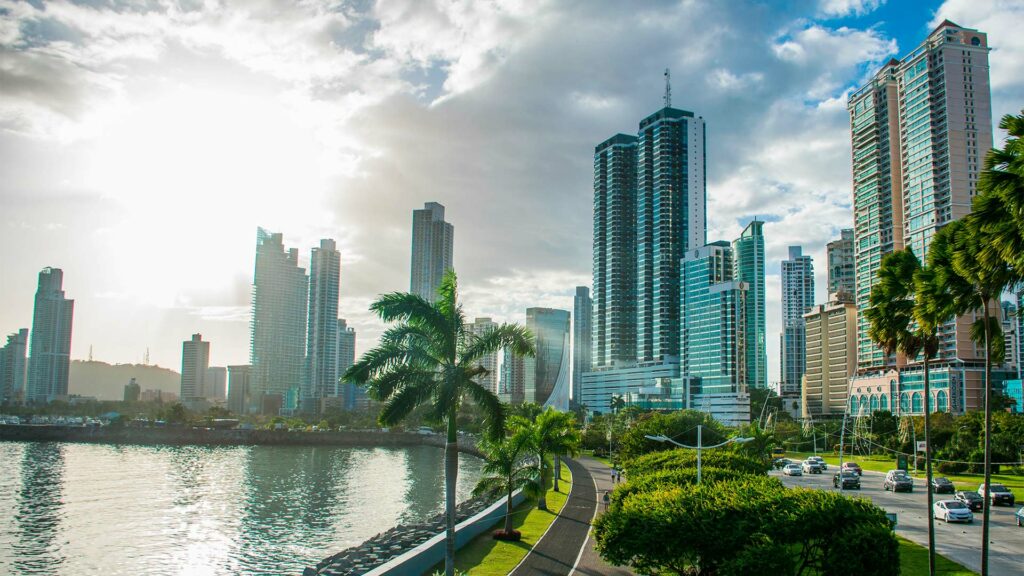
Immigration lawyers in Panama can help foreign nationals, investors, retirees, professionals, employees, entrepreneurs and families determine the most appropriate legal pathway to live, invest, work or establish long-term residence in the Republic of Panama.
Panama has developed one of the most diverse immigration systems in Latin America. Depending on your nationality, financial circumstances, professional background, employment situation, family connections or investment plans, you may qualify for temporary residence, permanent residence, a special immigration permit or another immigration category.
However, choosing a Panama visa should not begin by simply selecting the program that appears fastest or cheapest. Each immigration category has its own legal requirements, documentation standards, financial conditions and limitations.
Our immigration lawyers in Panama assist clients in evaluating their circumstances before an application is filed, organizing documents, reviewing foreign certificates, preparing immigration petitions and representing applicants before the relevant Panamanian authorities.
Panama’s immigration system is primarily governed by Decree Law No. 3 of February 22, 2008, its regulations, subsequent executive decrees, special legislation and international agreements. The legal framework distinguishes between non-residents, temporary residents and permanent residents, together with multiple specialized subcategories.
This guide explains the principal immigration options available in Panama in 2026, including the Friendly Nations residence program, Qualified Investor residence, Pensionado residence, professional immigration categories, employment-based residence, multinational company visas, family-based residence, student permits and other alternatives.
Because immigration regulations can be amended, applicants should verify the requirements applicable on the date their application is submitted.
There is no single Panama residency visa that applies to every foreign national.
The correct immigration pathway depends primarily on why you want to reside in Panama and how you qualify.
A foreign national may potentially qualify because he or she:
Panama’s National Immigration Service currently identifies numerous temporary and permanent residence categories, including economic, employment, special-policy, demographic, educational, religious and family-reunification categories.
An immigration lawyer in Panama can evaluate which category corresponds to the applicant’s actual circumstances and whether additional procedures, such as obtaining a work permit from the Ministry of Labor, will also be necessary.
Panama continues to attract foreign residents from North America, Europe, Latin America, Asia and other regions.
Its appeal is not based exclusively on immigration programs. Panama also serves as an international business, banking, logistics and transportation center connecting North America, South America, Europe and Asia.
The U.S. dollar circulates alongside the balboa at parity, facilitating financial planning for international investors and residents accustomed to dollar-denominated transactions.
For many foreign nationals, this removes one of the currency risks associated with relocating to another Latin American country.
Tocumen International Airport provides extensive international connections, while Panama’s maritime position and the Panama Canal have helped establish the country as a global transportation and logistics hub.
Panama hosts multinational companies, regional headquarters, banking institutions, logistics companies, maritime businesses, technology companies and international professional services firms.
The country also maintains specialized economic regimes, including the SEM regime for Headquarters of Multinational Companies, Panama Pacifico and free-zone structures.
Foreign nationals generally consider Panama City, Costa del Este, Punta Pacifica, San Francisco, Bella Vista, Boquete, Coronado and other areas depending on whether their objective is investment, retirement, business or quality of life.
Certain immigration programs can also be based upon qualifying real estate investments.
Panama’s Pensionado program remains one of the country’s best-known immigration categories for foreign retirees receiving a qualifying lifetime pension.
Foreign residents have established substantial communities throughout Panama, particularly in Panama City, Panama Oeste, Boquete, Coronado and other areas.
These factors make immigration law an important component of relocation planning. Before purchasing property, accepting employment or transferring significant funds, it is advisable to determine whether the proposed structure will actually satisfy the requirements of the intended immigration category.
The modern legal framework for immigration in Panama is based principally on Decree Law No. 3 of February 22, 2008, which created the National Immigration Service and established the principal immigration categories and regulatory structure.
The law distinguishes among non-residents, temporary residents and permanent residents.
Under the legislation, temporary residence can be granted for employment, investment, special policies, education, religious activities, humanitarian considerations, family reunification and other legally recognized purposes. Permanent residence categories include economic, demographic, employment, special-policy and special-law pathways.
Subsequent executive decrees and special legislation have created or amended particular immigration programs.
For that reason, applicants should not rely exclusively on information written several years ago.
For example, the Friendly Nations program has changed significantly since its original creation. Similarly, Panama’s Qualified Investor program has been modified several times.
A professional immigration analysis therefore considers not only the name of the visa, but also the current decree, eligibility requirements and administrative practices applicable when the application is filed.
Understanding the difference between temporary and permanent residence is fundamental.
Temporary residence permits allow a foreign national to reside legally in Panama for the period authorized by the applicable category.
The general immigration framework permits temporary residence for various purposes including employment, education, religious activities, investment and family reunification.
The duration depends on the specific immigration category.
Temporary residence should not automatically be interpreted as a pathway to permanent residence. Some categories can eventually lead to permanent status while others operate under different rules.
Permanent residence authorizes a qualifying foreigner to establish residence in Panama on an indefinite basis, subject to compliance with applicable immigration law.
Several programs grant permanent residence directly, while others require a provisional or temporary period before the applicant becomes eligible to request permanent status.
This distinction is particularly important with the Friendly Nations program.
Historically, many websites described Friendly Nations as an immediate permanent residence program. Under the current regime, the applicant normally receives a two-year provisional residence permit before applying for permanent residence.
For this reason, immigration information from 2019, 2020 or even early 2021 may no longer accurately describe the current process.
The Friendly Nations Visa, commonly searched online as the Panama Friendly Nations Visa, is one of Panama’s best-known residence programs.
Its formal legal concept relates to nationals of specified countries that maintain friendly, professional, economic and investment relations with the Republic of Panama.
The program has been substantially restructured since its original creation.
Not under the current structure.
Applicants who qualify generally receive an initial two-year provisional residence, after which they may apply for permanent residence if they continue to satisfy the applicable legal conditions.
This is one of the most important corrections that should be made to older Panama immigration guides.
Depending on the applicable provisions, qualifying nationals may establish the required connection through approved circumstances such as employment or qualifying investments.
One commonly used investment route involves real estate with a qualifying value of at least US$200,000. Another recognized route involves a qualifying fixed-term deposit of at least US$200,000, while employment-based applicants must satisfy the immigration and labor requirements applicable to their employment relationship.
The precise structure should be reviewed before money is transferred or a property transaction is completed.
Under the applicable Friendly Nations rules, the real estate route can permit financing through a local bank, subject to the conditions established by the immigration regulations and the particular transaction.
Applicants should have the ownership structure reviewed before closing on a property.
Certain immigration structures may permit investments through legal entities when the applicant satisfies beneficial-ownership requirements. The proper structure should be established before filing.
The eligible-country list has changed over time.
A particularly important 2026 development occurred on August 31, 2026, when Panama issued Executive Decree No. 16 adding Ecuador to the Friendly Nations list.
Anyone evaluating eligibility should therefore use the current list rather than relying on older online articles.
Friendly Nations residence may be particularly relevant for qualifying citizens who:
Our Panama immigration lawyers can analyze nationality, investment structure and documentation before the application process begins.
The Qualified Investor Visa, formally a permanent residence category for Qualified Investors, is one of Panama’s principal residence-by-investment programs.
The program is particularly relevant for international investors seeking permanent residence through substantial investments in Panama.
The applicable framework was significantly updated by Executive Decree No. 193 of October 15, 2024, which modified Executive Decree No. 722 of 2020.
Under the current decree, a foreign investor may qualify through a real estate investment of at least:
US$300,000
The decree provides for qualifying real estate acquired in Panama and establishes conditions concerning the required investment amount and the treatment of financing above the qualifying equity amount.
The program can potentially apply to completed real estate and qualifying purchase-promise structures, depending on how the transaction is organized.
Executive Decree No. 193 also recognizes structures involving a real estate promise-of-sale agreement, subject to specific safeguards and documentary requirements.
These structures can involve qualifying trust arrangements or specified payment and guarantee mechanisms for property that has not yet been constructed, segregated or registered.
This makes legal review particularly important when purchasing pre-construction property for immigration purposes.
A normal real estate purchase contract is not automatically an immigration-compliant investment.
A Qualified Investor can also potentially qualify by investing at least:
US$500,000
through qualifying securities investments conducted through an appropriately licensed securities intermediary in Panama and satisfying the applicable regulatory requirements.
The decree establishes a five-year maintenance requirement for this form of investment.
Another option is a fixed-term bank deposit of at least:
US$750,000
with a qualifying bank operating in Panama.
The decree establishes a minimum five-year term and requires the deposit to remain free from encumbrances.
Qualified Investor applications require careful documentation regarding the investment and the foreign source of funds.
This makes coordination between the immigration lawyer, bank, real estate professionals, securities firm or other relevant professionals essential.
A common mistake is buying property first and asking an immigration lawyer afterward whether the investment qualifies.
The correct sequence is usually the opposite.
An investor considering Panama residency through investment should first determine:
This can prevent an otherwise attractive investment from failing to satisfy immigration requirements.
The Pensionado Visa, formally the Permanent Resident Permit as Retiree or Pensioner, remains one of Panama’s most recognized immigration programs.
It applies to qualifying foreign nationals who receive a lifetime retirement or pension benefit from a foreign government, international organization or private company.
The general minimum is:
B/.1,000 — equivalent to US$1,000 per month
The pension must generally be granted for life.
For each qualifying dependent, additional financial solvency of US$250 per month is normally required.
The official rules also provide that when an applicant personally owns qualifying property in Panama with a value exceeding US$100,000, the qualifying pension may be reduced to US$750 per month, subject to the applicable requirements.
If the pension originates from a private company rather than a government, additional evidence may be required concerning the entity granting or administering the pension.
Documentation can include certifications regarding the pension administrator, existence of the relevant entity and proof that pension payments are being received.
Spouses and qualifying dependents can potentially be included, although different rules may apply depending on age and relationship.
Children who remain dependents after reaching adulthood may be subject to additional conditions, including education requirements.
Retirement residence and authorization to work are legally distinct concepts.
A person should not assume that possession of an immigration residence card automatically authorizes unrestricted employment.
Before working, establishing employment or providing professional services in Panama, the individual should evaluate applicable labor and professional regulations.
Panama also maintains a residence category for certain foreign professionals.
This route can be important for foreign nationals with university degrees who intend to establish themselves professionally in Panama.
However, obtaining residence as a professional does not mean every profession can legally be practiced by a foreign national.
Panama reserves or regulates various professions and occupations by law.
The National Immigration Service currently identifies the Foreign Professional category among permanent-residence pathways under special laws.
Applicants should therefore evaluate two different questions:
First: Does the academic qualification support the immigration application?
Second: Is the profession legally open to foreign nationals in Panama?
These questions are not interchangeable.
Professional degrees obtained abroad may also require authentication, apostille, recognition or other procedures depending on how the applicant intends to use them.
Residence and employment authorization are separate legal matters.
Foreign employees generally require appropriate authorization from the Ministry of Labor and Workforce Development — MITRADEL before legally working in Panama, unless a specific legal exception applies.
MITRADEL states that migrant workers must obtain authorization to work in the country and currently organizes work permits into multiple classifications according to the worker’s immigration and employment circumstances.
These include categories involving:
The applicable category depends on the worker, employer, immigration status and legal basis for employment.
Panama’s immigration and labor framework contains categories commonly known as the 10% ordinary personnel category and the 15% technical or specialized personnel category.
The National Immigration Service continues to list corresponding residence categories, while MITRADEL administers the labor authorization component.
Employers should review their existing workforce before hiring foreign personnel because quotas and special conditions may apply.
Not necessarily.
The immigration permit and labor authorization should always be reviewed separately.
Some special immigration regimes have specific employment provisions, while others may require a separate work permit.
Panama maintains the SEM regime — Sedes de Empresas Multinacionales, or Headquarters of Multinational Companies.
The regime was created under Law 41 of August 24, 2007 and subsequently amended.
It is designed for qualifying multinational enterprises establishing operations in Panama to provide approved services to their corporate group.
Foreign employees receiving a Permanent Personnel Visa under the SEM regime are entitled to work in Panama while employed by the licensed multinational company according to the conditions established by the SEM legislation.
MICI indicates that the permanent personnel visa can be issued for five years and renewed for additional five-year periods, subject to the applicable employment relationship and legal requirements.
The regime also provides a temporary personnel visa for foreign personnel providing technical services or training.
According to MICI, this category can apply for a period of up to three months, with a potential extension for an additional three months under the applicable conditions.
For multinational companies, immigration planning should be coordinated with the company’s SEM license, employment arrangements and corporate structure.
The Panama Pacifico Special Economic Area operates under a specialized legal regime created by Law 41 of 2004.
Panama’s immigration authorities maintain categories for investors, employees, specialized personnel and other persons connected with Panama Pacifico businesses.
These categories can be particularly relevant for international companies operating in logistics, technology, manufacturing, aviation, regional services and related sectors.
Foreign executives considering a transfer to Panama should determine whether their employer operates under Panama Pacifico, SEM, a free zone or the ordinary corporate regime because immigration and labor requirements can differ significantly.
Panama maintains several special economic regimes designed to attract international trade and investment.
These include free zones, Panama Pacifico, multinational headquarters structures and other specialized regimes established by particular laws.
The National Immigration Service lists residence categories associated with certain free-zone, export-processing, international-company and special-economic-area activities.
An executive relocating to Panama under one of these regimes should avoid assuming that a general employment visa is automatically the best solution.
The underlying company’s legal regime may provide a more appropriate immigration pathway.
Family relationships can also provide a legal basis for residence.
The immigration system contains categories addressing family reunification, marriage to a Panamanian citizen, dependent status and foreign nationals with Panamanian children.
Marriage to a Panamanian national can create a basis for immigration residence, but marriage alone does not mean that permanent residence or citizenship is automatically granted.
Immigration authorities may require evidence concerning the authenticity and continuity of the marital relationship.
Applicants should prepare documentation carefully and truthfully.
Foreign parents with Panamanian children may potentially qualify through a relevant immigration category when statutory requirements are satisfied.
Spouses, qualifying children and certain other dependent relatives may potentially qualify for residence based on the principal resident.
The exact requirements depend on relationship, age, dependency and the immigration status of the principal applicant.
Foreign nationals enrolled in qualifying educational programs can potentially obtain temporary immigration status for educational reasons.
The National Immigration Service currently maintains temporary residence categories for education as well as certain specialized educational and exchange programs.
Students should understand that a student immigration permit is designed primarily for educational purposes.
Employment rights are governed separately and should not be assumed merely because the student holds legal residence.
Documents commonly associated with an educational application can include evidence of enrollment, financial support, academic documentation and other immigration requirements.
The exact documentation depends on the educational institution and program.
Panama’s immigration system also recognizes a short-stay category for remote workers among its non-resident immigration options.
This can be relevant for foreigners whose employment or professional activities are performed remotely for businesses or clients located outside Panama and who do not require a traditional employment relationship with a Panamanian employer.
However, a remote-work status should not be confused with permanent residence.
Anyone planning a long-term relocation should evaluate whether a temporary remote-worker option or a residence program better reflects the person’s objectives.
Tax considerations should also be evaluated separately from immigration status.
Panama’s immigration system includes additional categories associated with investment.
The official immigration portal currently identifies categories related to agricultural investment, forestry investment, macro-enterprise investment and various special economic regimes.
These programs may contain requirements concerning:
These categories are highly fact-specific.
An investor interested in agricultural or commercial projects should have the immigration requirements reviewed together with corporate, real estate and regulatory considerations.
Humanitarian immigration matters should be distinguished from normal residence-by-investment or employment applications.
Panama maintains immigration mechanisms for specific humanitarian and protection circumstances and separate procedures concerning refugees. The current National Immigration Service portal identifies humanitarian categories and refugee-related procedures.
Eligibility depends on the person’s individual circumstances and the applicable national and international legal framework.
Humanitarian protection should therefore not be treated as an alternative to an ordinary investor, retirement or employment visa when the legal basis does not exist.
Panama’s official immigration system continues to recognize an immigration category connected with the Panama-Italy agreement.
Italian citizens considering residency in Panama should determine whether the treaty-based category or another available immigration pathway is more appropriate to their circumstances.
The fact that several immigration options may be available does not mean that all provide the same requirements, work rights or long-term consequences.
A comparative legal analysis can identify the most appropriate route.
The precise documentation varies significantly by immigration category.
Nevertheless, applicants frequently need documentation such as:
Passport.
A valid passport and properly authenticated copies are generally fundamental.
Criminal background certificate.
Many residence applications require a criminal-record certificate issued by the appropriate authority of the applicant’s country or jurisdiction, subject to applicable immigration rules.
Health certificate.
A health certificate issued in Panama is commonly required for residence applications.
Application and power of attorney.
Many immigration applications are processed through a Panamanian lawyer using the required legal application and power.
Personal background declaration.
Immigration procedures can require sworn or official personal-information forms.
Civil-status documents.
Marriage certificates and birth certificates are frequently required for spouses and dependents.
Financial evidence.
Investment, bank, employment and pension categories require documentation demonstrating the applicant’s qualifying financial or professional circumstances.
Immigration-category-specific evidence.
For example, an investor may require Public Registry certificates, bank documents or investment certifications, while an employee may need employer and labor documentation.
The official Pensionado requirements, for example, include the petition through legal counsel, passport documentation, criminal-background certificate, health certificate, personal-background declaration and evidence of the qualifying pension.
Foreign public documents often need to be authenticated before they can be used in Panama.
Depending on the issuing country, this may involve:
Apostille, when the relevant international convention applies; or
Consular legalization, when the document comes from a jurisdiction for which apostille procedures are not applicable.
Documents should be prepared before traveling when possible because obtaining a new criminal record, birth certificate, marriage certificate or pension certification after arriving in Panama can create substantial delays.
Applicants should also confirm how recent each document must be when the immigration application is filed.
A document can be authentic but still unusable if it does not satisfy immigration timing requirements.
Documents issued in English or another foreign language may need to be translated into Spanish by an authorized translator for use before Panamanian authorities.
The applicant should avoid relying only on an informal translation.
Translation, apostille and legalization are different processes.
A document may therefore need:
Proper document planning can significantly reduce preventable delays.
The criminal-record certificate is one of the most important documents in many residence applications.
Applicants should determine:
A local police report may not necessarily satisfy the immigration requirement when the rules call for a national or federal-level certificate.
This should be verified before obtaining the document.
Residence applications commonly require a health certificate issued in Panama.
The certificate is distinct from travel insurance or medical records from the applicant’s home country.
Applicants should arrange the certificate according to immigration requirements and ensure that the information matches their passport documentation.
Minor inconsistencies in names, passport numbers or documentation can generate requests for correction.
One of the most important principles for foreigners moving to Panama is that immigration residence and labor authorization are not necessarily the same thing.
The National Immigration Service handles immigration status.
The Ministry of Labor and Workforce Development handles migrant work authorizations under the applicable labor rules.
MITRADEL expressly states that migrant workers are required to obtain authorization to work in Panama and organizes current permits according to several legal classifications.
Therefore:
A residence card does not always mean unlimited employment rights.
A company should not assume that a foreign resident can automatically be hired.
An immigration strategy should be reviewed together with the person’s employment plan.
Panama reserves or regulates various professions for Panamanian nationals or persons meeting specific legal requirements.
This issue is especially important for doctors, engineers, architects, attorneys, accountants and other regulated professionals.
MITRADEL maintains information concerning regulated professions or occupations that may be restricted for migrant workers.
A foreign university degree does not automatically authorize the holder to practice the corresponding profession in Panama.
A person may have legal residence and still face professional restrictions.
Before relocating for professional purposes, applicants should determine:
No.
Purchasing real estate in Panama does not automatically create immigration residence.
The property must satisfy the requirements of an immigration category that recognizes real estate investment.
For example, the Qualified Investor program presently provides an immigration route based on qualifying real estate investment beginning at US$300,000, while the Friendly Nations program has a separate investment structure for eligible nationals.
Consequently, a US$150,000 apartment might be a perfectly valid real estate investment but may not satisfy an immigration category requiring a higher qualifying amount.
Immigration planning should therefore occur before the property purchase is completed.
Not automatically.
Foreign nationals can participate in Panamanian corporate structures, but merely incorporating a company does not itself guarantee a residence permit.
The applicant must still qualify under a valid immigration category.
A company can nevertheless form part of a broader immigration or business strategy when the applicable immigration laws recognize employment, investment or corporate circumstances.
Company formation, tax planning, employment law and immigration law should therefore be coordinated rather than treated as unrelated transactions.
No.
Opening a personal or corporate bank account does not automatically provide immigration residence.
Certain immigration categories may recognize specific qualifying bank deposits, but simply having funds in a checking or savings account is not equivalent to satisfying an immigration investment requirement.
For example, Qualified Investor residence presently recognizes a fixed-term banking investment beginning at US$750,000, subject to specific conditions including a minimum five-year term and lack of encumbrances.
Friendly Nations has separate financial-investment rules.
Applicants should establish the immigration strategy before structuring the deposit.
Immigration residence and tax residence are different legal concepts.
Obtaining an immigration card does not automatically resolve every tax-residency question.
Similarly, purchasing property or forming a corporation does not necessarily create the same legal consequences for tax purposes as obtaining immigration residence.
Foreigners relocating to Panama should separately analyze:
For international clients, coordination between immigration counsel and qualified tax professionals can be important, particularly when the person maintains businesses, investments or residences in several countries.
A tourist should not assume that tourist status authorizes employment.
Tourist status is a non-resident immigration category intended for temporary entry rather than ordinary local employment.
Under Decree Law No. 3 of 2008, tourists fall within the non-resident framework.
Foreign nationals who intend to work in Panama should establish the correct immigration and labor status before commencing employment.
Employers should also verify immigration and labor authorization before hiring foreign workers.
Depending on the particular situation and immigration category, a person who entered Panama as a tourist may potentially be able to seek a change of immigration category.
Decree Law No. 3 provides a framework allowing tourists to request a change of immigration category and potentially obtain additional time for completing documentation when the legal requirements are satisfied.
However, applicants should not rely on the assumption that every immigration category can always be completed after entering as a tourist.
Nationality, entry requirements, visa status and the intended residence category should be reviewed before travel.
There is no responsible single answer for every immigration category.
Processing time depends on:
Certain specialized programs are designed for expedited handling.
The Qualified Investor framework, for example, was created with a specialized process intended to facilitate investment applications, and government investment authorities continue promoting the program as an important foreign-investment mechanism.
Nevertheless, immigration lawyers should avoid guaranteeing a specific approval date because final decisions remain with governmental authorities.
There is no universal price for every Panama immigration case.
The total cost can include:
Some categories also have exemptions or special fee structures.
For that reason, applicants should obtain a written quotation based on the specific residence category rather than relying on a generic online figure.
A well-organized immigration process begins before documents are submitted.
We first determine the applicant’s objective.
Are you planning to retire?
Work for a Panamanian company?
Purchase real estate?
Move your family?
Establish a business?
Work for a multinational?
Invest without living permanently in Panama?
Different objectives can produce different recommendations.
We analyze nationality, financial circumstances, employment, pension, family status, investments and professional background.
We compare available options rather than automatically choosing the most widely advertised visa.
The client receives a list of documents required in Panama and abroad.
Foreign documents are reviewed to determine whether they require apostille, legalization or translation.
When the visa depends on a property purchase, bank deposit, employment contract or another transaction, we coordinate the immigration requirements before the transaction is completed.
Legal applications, powers of attorney and supporting documentation are prepared.
The application is submitted according to the procedures governing the relevant immigration category.
Our legal team monitors the proceeding and responds to requests for additional information when necessary.
Once approved, the applicant completes the corresponding procedures for the immigration status granted.
A person may technically qualify for several visas, but some routes may require substantially more money, more documentation or more time than others.
An investment can fail to satisfy immigration requirements because of value, ownership structure, financing or registration.
Panama’s immigration rules evolve.
Friendly Nations is one clear example: older articles often continue to describe a system that provided immediate permanent residence, even though the present structure begins with provisional residence.
Applicants sometimes obtain municipal or local records when a different level of certification is required.
Documents issued abroad may not be accepted without proper authentication.
Some immigration documents have validity periods.
An applicant who waits too long may have to obtain and apostille documents again.
Employment authorization must be evaluated separately.
Legal residence does not override laws regulating professions.
Names, passport numbers, dates of birth and civil-status information should be consistent throughout the application.
Immigration matters should be handled through properly authorized professionals and official procedures.
Immigration applications involve more than submitting forms.
For investors, the residence strategy may be connected to a property transaction worth hundreds of thousands of dollars.
For multinational executives, immigration is connected to employment and corporate regulation.
For retirees, the application depends on properly documented foreign pension rights.
For families, birth and marriage records must be correctly authenticated.
For professionals, immigration rules must be evaluated alongside professional restrictions and labor authorization.
A Panama immigration lawyer can help identify potential problems before they result in delays or financial consequences.
Our objective is to organize the process from the beginning, explain the legal alternatives clearly and assist the client throughout the immigration procedure.
Panama continues to receive substantial numbers of residence applications.
Official National Immigration Service statistics reported 10,864 approved residence permits during January through April 2026, including permits under Friendly Nations, multinational-company employment, Pensionado, professional, Qualified Investor and other categories.
These statistics demonstrate that Panama’s immigration system is not based around a single investor or retirement visa.
Different profiles continue to use different immigration pathways.
For international clients, this diversity is advantageous—but it also makes proper legal analysis more important.
The most appropriate program for a 70-year-old retiree may be completely different from the appropriate program for a 40-year-old entrepreneur, multinational executive or real estate investor.
There is no single best Panama visa.
The appropriate option depends on nationality, income, pension, investment, employment, profession and family relationships.
A retiree receiving a lifetime pension may prefer the Pensionado category.
An investor may consider Qualified Investor residence.
A qualifying citizen with employment or an eligible investment may consider Friendly Nations.
A multinational executive may qualify under SEM.
The correct choice requires comparison of the available legal alternatives.
Yes.
U.S. citizens may potentially qualify under several Panama residence categories depending on their circumstances.
Possible routes can include Friendly Nations, Qualified Investor, Pensionado, professional or employment-related categories, family-based residence and other specialized programs.
U.S. citizenship alone, however, does not automatically provide Panamanian residence.
The applicant must satisfy the requirements of a valid immigration category.
Yes, if the person qualifies under an applicable residence category.
Canadian citizens may have several potential pathways depending on employment, investment, retirement income, professional credentials or family relationships.
Citizens of European countries can apply for Panama residence when they meet the requirements of a qualifying immigration category.
Several European nationalities are included in the Friendly Nations regime, while other programs such as Qualified Investor or Pensionado are based principally on investment or income rather than a specific nationality.
Italian citizens may also have a treaty-related immigration option.
Yes.
This is an important new development.
On August 31, 2026, Panama issued Executive Decree No. 16 adding the Republic of Ecuador to the countries covered by the Friendly Nations regime.
Because this change is extremely recent, many Panama immigration websites published before September 2026 may still contain an outdated country list.
The present process should not be described as immediate permanent residence.
Under the current framework, qualifying applicants generally receive a two-year provisional residence period, after which they can apply for permanent residence if the legal requirements continue to be satisfied.
The applicable Friendly Nations investment route has used a minimum qualifying real estate value of US$200,000, subject to the program’s requirements.
Eligibility also depends on nationality and the structure of the investment.
Under Executive Decree No. 193 of October 15, 2024, the principal current thresholds include:
US$300,000 for qualifying real estate investment.
US$500,000 for qualifying securities investment.
US$750,000 for a qualifying fixed-term bank deposit.
Additional requirements apply to each investment method.
The category is structured as a permanent residence program for qualifying investors.
The underlying investment must satisfy the legal conditions established by the applicable decrees.
Potentially.
Executive Decree No. 193 expressly addresses certain qualifying real estate investments made through promises to purchase, including structures involving trusts or specified guarantees.
Because these arrangements have detailed legal conditions, the purchase agreement and payment structure should be reviewed before the transaction is executed.
The general Pensionado requirement is a qualifying lifetime pension of at least US$1,000 per month.
An additional US$250 per month for each qualifying dependent is generally required.
The official rules also contain a property-based exception that can reduce the pension requirement to US$750 when the specified property requirements are satisfied.
The principal legal focus of the Pensionado category is the qualifying pension rather than simply reaching a particular retirement age.
A person should therefore analyze whether the pension itself satisfies the legal requirements.
Many residence categories permit qualifying dependents.
The documentation and financial requirements depend on the particular immigration program.
Marriage certificates generally need to satisfy Panama’s authentication requirements.
Qualifying dependent children can potentially be included in many applications.
Age, financial dependency, education and the specific residence category can affect eligibility.
Many Panamanian immigration residence procedures are formally presented through legal counsel, and a lawyer can also coordinate foreign documentation, applications, powers of attorney and responses to immigration authorities.
Applicants should use qualified legal professionals and official governmental procedures.
This depends on the person’s immigration status, labor permit and applicable legal category.
Filing a residence application should not automatically be interpreted as permission to begin employment.
The labor authorization should be separately verified.
Foreign nationals can participate in many business activities in Panama, but company ownership, immigration residence and authorization to personally work are separate legal matters.
Professional and commercial restrictions may also apply depending on the activity.
Yes.
Panama has numerous residence categories that do not require a property purchase.
Depending on the applicant, these can involve pension income, employment, family relationships, multinational-company employment, professional qualifications, financial investments or other legal grounds.
No.
Permanent residence and Panamanian citizenship are different legal statuses.
Obtaining permanent residence does not automatically make someone a citizen or provide a Panamanian passport.
Naturalization is governed by separate constitutional and legal requirements.
Nationality questions can be complex because both Panamanian law and the laws of the applicant’s existing country or countries can be relevant.
Anyone considering naturalization should obtain a separate nationality-law analysis before beginning the process.
Immigration status must continue to be maintained according to Panamanian law.
Certain circumstances can affect residence, including failure to satisfy conditions associated with a specific immigration program.
Investors in particular should understand any minimum period during which a qualifying investment must remain in place.
International travel while an immigration application is pending should be coordinated with legal counsel because the applicant may need the appropriate immigration documentation before leaving Panama.
Do not make travel plans based solely on having submitted a residence application.
Immigration authorities may request corrections or additional documentation, and substantial deficiencies can delay or negatively affect an application.
Reviewing the file before submission is usually more efficient than attempting to correct multiple problems afterward.
Applicants who need criminal records, pension certifications, marriage certificates, birth certificates, apostilles or other foreign documents should begin preparation before traveling when practical.
Investors should ideally seek immigration advice before transferring investment funds.
When selecting an immigration lawyer in Panama, a foreign applicant should look beyond advertisements promising the «fastest visa.»
A qualified legal adviser should first understand the client’s circumstances.
Relevant questions include:
What nationality do you hold?
Where have you been residing?
Do you want temporary or permanent residence?
Will you work in Panama?
Are you planning to purchase real estate?
Do you receive a lifetime pension?
Will your spouse and children apply?
Do you intend to establish a Panamanian company?
Are you employed by a multinational company?
Do you have a regulated profession?
Do you require tax planning?
Are your foreign documents already apostilled?
These questions can determine whether one immigration route is substantially better than another.
A proper immigration strategy should be tailored to the client rather than forcing every applicant into the same visa category.
Panama immigration information changes.
An article ranking highly on Google may still contain rules that were correct several years ago but are no longer current.
The Friendly Nations program is a perfect example.
Its historical popularity resulted in thousands of websites describing it as an immediate permanent residence program.
That description no longer reflects the current two-stage framework.
Panama also modified the Qualified Investor program through Executive Decree No. 193 in October 2024, including the current US$300,000 real estate threshold and additional rules concerning real estate purchase promises and investment structures.
And on August 31, 2026, the government added Ecuador to the Friendly Nations program.
These developments demonstrate why foreign applicants should confirm the law immediately before beginning an immigration process.
International immigration cases frequently involve more than Panamanian law.
Our clients may live in the United States, Canada, Australia, the United Kingdom, Europe, Latin America, Asia or other jurisdictions.
Documents must often be obtained abroad before the client arrives.
Our Panama immigration lawyers can help organize the process by identifying which foreign documents will be needed and how they must be authenticated.
This is particularly useful for:
Investors planning to acquire property before relocating.
Retirees who need pension certifications.
Executives being transferred by multinational companies.
Professionals evaluating whether they can work in Panama.
Families relocating with spouses and children.
Entrepreneurs establishing businesses.
Foreign property owners who already invested in Panama but have not established residence.
Remote workers evaluating longer-term immigration alternatives.
The objective is to structure the immigration process around the client’s real circumstances rather than simply filing paperwork.
Many immigration cases intersect directly with real estate law.
This is especially true for Qualified Investors and Friendly Nations applicants using real estate as the basis of their immigration application.
Before purchasing property for immigration purposes, legal due diligence should address both the property and the immigration strategy.
The review may include:
A property can be commercially attractive but legally unsuitable for the intended immigration program.
Using lawyers who understand both immigration and the legal structure of the investment can reduce this risk.
Business owners frequently require both corporate and immigration services.
An entrepreneur relocating to Panama may need to consider:
These matters should be coordinated.
Creating a corporation does not independently create immigration residence, and obtaining residence does not automatically authorize every type of commercial or professional activity.
For retirees considering Panama, our immigration lawyers can assist with:
Pensionado residence applications.
Review of pension certification.
Dependent applications.
Foreign-document apostilles.
Property-related immigration considerations.
Review of private pension documentation.
Power-of-attorney preparation.
Immigration filings.
Follow-up before the authorities.
Retirees should verify eligibility before relocating permanently because private pensions, annuities and retirement arrangements may require different supporting documentation.
For international investors, our immigration services can include:
Qualified Investor residence.
Friendly Nations investment applications for eligible nationals.
Real estate immigration planning.
Corporate structuring related to investments.
Review of investment documentation.
Coordination with financial institutions.
Source-of-funds documentation.
Dependent applications.
Permanent residence filings.
Investors should obtain legal advice before making the qualifying investment whenever possible.
Businesses employing foreign nationals in Panama may require coordinated immigration and labor assistance.
Services can include:
Assessment of immigration category.
Employment-based residence.
Work permits.
Foreign personnel quotas.
SEM personnel.
Panama Pacifico personnel.
Special economic regimes.
Corporate documentation.
Employment-contract documentation.
Dependent immigration applications.
Renewals and status reviews.
Failure to coordinate immigration and employment law can create compliance problems for both the company and employee.
An immigration consultation allows us to determine the most appropriate legal pathway before the client begins obtaining documents or transferring funds.
Useful information to provide during the consultation includes:
With this information, an immigration lawyer can compare the available options and provide a tailored list of requirements.
If you are planning to move to Panama, obtain permanent residence, apply for a Panama visa, invest in real estate, retire in Panama, obtain a work permit or relocate your family, our immigration lawyers can help you evaluate the available legal options.
We assist foreign individuals, families, professionals, investors, retirees, executives and companies with immigration matters throughout the Republic of Panama.
Every immigration case begins with understanding your particular circumstances.
Rather than selecting a visa based only on information found online, we can review your nationality, investments, employment, pension, family situation and long-term objectives and determine which Panama immigration category may be most appropriate.
Phone: 381-2644
Email: info@abogadosenpanamalawyers.com
Address: Avenida Balboa, Bay Mall, 3rd Floor, Office 304.
Contact our legal team to discuss your Panama visa, residency or work permit and receive guidance regarding the documents and legal process applicable to your case.
Legal notice: Immigration laws, regulations, administrative criteria, fees and documentary requirements may change. Information on this page is provided for general educational purposes and should not be considered a guarantee of approval or a substitute for individualized legal advice. Requirements should be confirmed according to the law and administrative rules in effect when an application is filed.